Showing posts with label Contemporary Fiction. Show all posts

Saturday, 31 August 2024

Friends of Dorothy by Sandi Toksvig


320 pages

Publisher: Little Brown Group UK / Virago

Release Date: September 26, 2024


Blurb

After much searching, the happily married young couple, Amber and Stevie think they have found the perfect spot in Grimaldi Square. Despite the rundown pub across the way, the overgrown garden and a decidedly nosy neighbour, number 4 is the house of their dreams. Stevie, a woman who has never left anything to chance, has planned everything so nothing can spoil their happiness. But ... upstairs in their new home, seated on an old red sofa is the woman they bought the place from - eighty-year-old foul-mouthed, straight-talking, wise-cracking Dorothy - who has decided that she's not going anywhere. It turns out that Dorothy will be only the first in a line of life-changing surprises.


Friends of Dorothy is a touching, funny novel about a family that is not biological, but logical; a story close to Sandi Toksvig's heart.


Review

The last thing anybody moving into their new house expects to find is the former owner still in situ. But that’s exactly what happens to Stevie and Amber when they take possession of number 4 Grimaldi Square. Dorothy Franklin sits comfortably on a red sofa in one of the bedrooms with a suitcase by her side and she has no intention of leaving. Despite Stevie and Amber’s best efforts, there’s no getting through to Dorothy who appears to be staying for a reason she isn’t willing to disclose.

Life with Dorothy turns out to be anything but boring. From a demolished internal wall, via delicious meals, to heart-stopping rides through London, Dorothy keeps the two young women on their toes. She also introduces them to the neighbourhood and the pub across the road that has seen better times and is called The Price of Onions. Without being sure how it happens and while they’re busy trying to come up with a solution for Dorothy that doesn’t involve her living with them, Stevie and Amber find their new life taking shape and their circle of friends growing.

This is mostly a lighthearted, at times laugh-out-loud story. However, it isn’t without its deeper and darker moments. It is also a commentary on parenting, the housing market, the way society deals with our elderly, and LGBTQ+ issues, for starters. It is fair to say that while I found myself crying on numerous occasions while reading this book, most, but not all, of those tears were triggered by laughter. Overall though I would call this a feel-good read. While the book itself states that it isn’t a fairytale, the story does come with perfect happy endings for all the characters who deserve them.

I adored this book. It’s almost certainly going to be (one of) my favourite book(s) this year and goes straight to my ‘extra-special’ list. There is so much to love on these pages. Quirky and charming characters, lively dialogue, and not a boring moment, make this a memorable read. While the stories are different, the atmosphere of this book, the diversity of the characters, and the idea of logical rather than biological families reminded me of the Tales of the City books by Armistead Maupin. Considering how much I loved those tales the comparison is a compliment.

Finally, I’m pretty sure Sandi Toksvig referenced herself in her book when she wrote:

 “That lesbian on the telly – what shername – she has kids.”

And yes, this was one of many times when I laughed out loud.

Long review short: Friends of Dorothy is a delightful book! So much so that I want to live in Grimaldi Square, be part of that world, and become one of Dorothy’s friends.

Monday, 24 July 2023

Queen Bee by Ciara Geraghty


416 pages

Publisher: HarperCollins

Publishing Date: Feb 2023

Own

Book Club Selection


Blurb

Agatha Doyle is in denial. Her glorious empty nest has filled up with two adult sons and a widowed father busy renovating her childhood home for his new girlfriend. Worst of all, she can’t seem to write a word of her overdue novel. Or confide in her husband, Luke, that she’s plunged off a cliff into menopause.

When she’s talked over at a panel event, Agatha has had enough – stepping forward she stands up for herself and unintentionally goes viral, becoming the poster girl for midlife women everywhere.

But underneath the new life, what is happening in her old one – and in particular, her marriage?


Review

Well, this was quite a read and I’ve got some thoughts. 😊

I really liked the idea that formed this story. Goodness knows that it’s all too ‘easy’ these days to achieve online fame and/or notoriety, so Agatha going viral after a rant for middle-aged women and against the patriarchy is more than realistic. What’s more, the underlying idea that menopause is something that is either denied or ignored isn’t too far from the everyday truth either. It’s a bit like other issues that exclusively affect women. Menstruation, pregnancy, and menopause are ‘inconveniences’ that the world (read: mostly men) has decided we should just put with while shutting up about them. Men-flu on the other hand… Don’t get me started.

Did you see what happened there? I was only trying to review a book and within one paragraph I find myself ‘pulling an Agatha’, be it less publicly.

But, back to my thoughts on the book. So, the instant fame premise works very well. The same can be said for Agatha’s anger and exasperation about…well, basically the world at large. Except that, I’m not sure anybody, no matter how hormonal, is angry and snarky all the time. And with Agatha, it does appear to be a continuous anger rather than an ebb and flow of mood swings; coming and going just as the hot flushes and night sweats do. Of course, we only know about Agatha’s moods because she writes about them, and like most people who keep a journal, she writes about the emotional high and low lights and not about the mundane ‘meh’ moments in between. Which is fair enough, and there are one or two moments when we get glimpses of a more mellow Agatha, but I would like to have seen a few more of those. And I would have liked it if she hadn’t grumbled about every nice thought she had or any good deed she did. Not only because that would have made Agatha more sympathetic but also because it would create a (bigger) contrast with all her anger and frustration.

But enough about that. That long paragraph makes Agatha’s anger sound like a huge issue, which it wasn’t. It’s just something I noticed along the way.

This story is firmly and very well set in the world we live in right now. Grown-up children returning to live at home and not having any real prospects of setting up a life for themselves independently; it’s sadly all to recognisable. I’m guessing that anybody who’s been in a relationship for a long(er) period of time is aware of how easily things can slip into a rut. And goodness knows that Agatha isn’t the only one struggling to juggle work, home, love, friendships, children, parents, and whatever else the world decides to throw our way.

I may have given you the impression that Queen Bee is a heavy, somewhat dark story. And that couldn’t be further from the truth. In fact, Queen Bee is a smoothly written, light-hearted, and effortless read. At times Agatha’s thoughts are laugh-out-loud funny and I found myself chuckling more than once. There isn’t a boring moment in this story as the plot pushes you along until it reaches its climax.

As for that climax…Let’s just say it used two plot devices I’m not fond of and leave it at that.

Overall, I really liked Queen Bee. Just like in her earlier books, Ciara Geraghty created a fascinating main character that pulled me into her story and didn’t let go until I’d reached the final page. The side characters were well-presented and interesting. The way this rather light-hearted read managed to raise real and complicated issues is impressive. And I think it’s wonderful such a strong and feisty voice was given to menopause. I can only hope it will resonate.

In other words: Queen Bee is a good story well told.


*****


Side note:

I’m curious. Do (Irish) women (in general) really never discuss menopause? If the answer to that question is yes, I guess I should be grateful for my mother who, at some point during the late 1970’s announced to my brother and me that she was menopausal and that she was probably going to be short-tempered from that moment forward. Truth be told, I don’t remember her as being particularly short-tempered but that doesn’t mean I didn’t appreciate the heads-up or the ease with which she announced that phase in her life.

Also: how does the Queen bee dying relate to our titular Queen Bee fleeing to LA? Or does it?


Monday, 25 July 2022

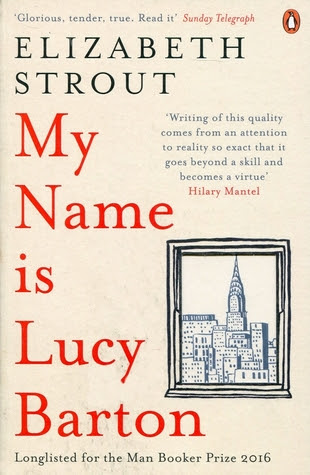
My Name is Lucy Barton by Elizabeth Strout


193 Pages 

Publisher: Penguin

Book Club Read


Blurb

Lucy Barton is recovering slowly from what should have been a simple operation. Her mother, to whom she hasn't spoken for many years, comes to see her. Her unexpected visit forces Lucy to confront the tension and longing that have informed every aspect of her life: her impoverished childhood in Amgash, Illinois, her escape to New York and her desire to become a writer, her faltering marriage, her love for her two daughters.


Knitting this powerful narrative together is the brilliant storytelling voice of Lucy herself: keenly observant, deeply human, and truly unforgettable. In My Name Is Lucy Barton, one of America's finest writers shows how a simple hospital visit illuminates the most tender relationship of all-the one between mother and daughter.


Review

My Name is Lucy Barton was a fascinating read. For the longest time, I wasn’t sure exactly what I was reading. At first, the story felt fragmented and confused; it went back and forth in time and since it was told in short paragraphs and chapters, it initially also felt incomplete.

This improved as I got further into the story, though. Or maybe, my perception of it changed once I recognised that the story was told the way our thought processes work; rarely linear and often jumping from time to time and topic to topic.

As the blurb states, this is a tale of a woman who has more or less completely cut herself off from her impoverished and often cruel childhood. But while it is possible to take oneself away from a situation, it is much harder to separate ourselves from the person who experienced that situation. While Lucy is in hospital, she has plenty of time to contemplate her life, who she is, and how she relates to her life and the people she has encountered. Her mother’s visit, which is completely out of character for the mother Lucy remembers, adds new angles to Lucy’s memories as she discovers that it is impossible to leave yourself in the past.

Where I disagree with the blurb, or rather, where I feel the blurb is incomplete is where it implies that the whole story is about the mother-daughter relationship. To me this was the story about Lucy discovering who she is, both because of and despite her fractious relationship with her past and family. It is only through reassessing what has gone before that she can move ahead and arrive at the point where she can say “My name is Lucy Barton” and fully (or as fully as any of us ever can) understand what that means.

My final thought about this book is that I had to remind myself more than once that I was reading a novel, a work of fiction, and not a memoir. I haven’t decided yet whether that is a pro or a con. 😊


Sunday, 17 April 2022

Girl A by Abigail Dean


326 pages

Publisher: HarperCollins

Book Club Read


Blurb

Lex Gracie doesn't want to think about her family. She doesn't want to think about growing up in her parents' House of Horrors. And she doesn't want to think about her identity as Girl A: the girl who escaped, the eldest sister who freed her older brother and four younger siblings. It's been easy enough to avoid her parents--her father never made it out of the House of Horrors he created, and her mother spent the rest of her life behind bars. But when her mother dies in prison and leaves Lex and her siblings the family home, she can't run from her past any longer. Together with her sister, Evie, Lex intends to turn the House of Horrors into a force for good. But first she must come to terms with her siblings - and with the childhood they shared.


Review


Yet another book where I’m not quite sure what to make of it.

This is what it says on the back of the paperback:

‘Girl A’, she said. ‘The girl who escaped. If anyone was going to make it, it was going to be you.’

I am Lex Gracie: but they call me Girl A.

I grew up with my family on the moors.

I escaped when I was fifteen years old.

NOW SOMETHING IS PULLING ME BACK…


And that is followed by ‘The biggest mystery thriller since Gone Girl’ – Elle.

The description and the blurb sounded intriguing and pulled me in as soon as I read them. But… Whatever this story is, it is not a mystery or a thriller. It’s a fascinating story, that’s for sure, but in a ‘car-crash-I-should-look-away-but-I-can not' sorta way. Sure, there are one or two shocking and unexpected revelations (which for obvious reasons I won’t go into) in this book, but most of what the reader gets is revealed in the blurb and in the first chapter.

This is the story of a family in crisis. Of a father becoming so obsessively religious that he puts his children in mortal danger, and a mother who isn’t strong enough (or too devoted to her husband?) to interfere on behalf of her children. It gives a fascinating view of how the circumstances affect every child a little differently. While they all suffer, they don’t suffer or deal with their suffering in identical ways.

Alexandra (Lex) – Girl A; the one who got away and saved her siblings.

Ethan – Boy A; as the oldest child he had privileges or was being groomed by his father to follow in his footsteps. He creeped my out, especially since he is referred to as a sociopath by one of his siblings. What creeped me out even more was that none of the siblings felt the need to warn his wife-to-be about the risks she faced if she married him.

Delilah – Girl B; described as a bit of a pretty airhead, she may have been smarter than the others in that she managed to charm those around her, including her father to some extent.

Gabriel – Boy B; ruined by his adoptive parents’ dreams of fame based on his nightmarish past as much as his horrific real family and everything that happened there.

Noah – Boy D; the only one young enough to have no memories of the horrors inflicted on the others and for that reason kept away from his siblings in an effort by his adoptive parents to give him a ‘normal’ life.

Evie – Girl C; the sibling closed to Lex.

Daniel – The only child without a chapter who would have been ‘Boy C’.

Of course, since the book is told only from Girl A’s perspective, we don’t necessarily get an accurate description of how her siblings experience and deal with their early years. All we know is what Girl A has observed and the conclusions she has drawn from that.

Although Lex’s escape and some of the horrors leading up to that moment are revealed very early on, there were huge stretches of the story where things didn’t seem that bad. The horror of their situation creeps up on the reader, just as it would have crept up on the children. As a result, the read became increasingly uncomfortable for me. I knew things had to get horrific in order to live up to both the book blurb and Lex finding the courage to escape the chains that bound her, but there was a long stretch where it was possible for me to believe that maybe it wouldn’t be that bad.

As I said, this book didn’t read as a mystery or thriller for me. It felt more like a character study; a description of how even when trapped in the same nightmare, all participants come out of it with different memories, different defense mechanisms, and different (lasting) consequences.

Finally, there is something I didn’t know before I started this book and now that I do know, I’m not sure how I feel about it. As it turns out, this story is based on a real-life domestic tragedy known as the Turpin family saga. Click the link if you would like to know more about that.

Overall, I’m not sure how I feel about this book. While it was a captivating read, it wasn’t at all what I expected. There were a few questions I would have liked a (clearer) answer to and, most frustratingly, I have no idea how the book ended. I mean, I read all of it, but I couldn’t tell you if that ending was hopeful or heart-breaking. The fact that I don’t really care what the answer to that conundrum is, explains my 3 ½ stars rating.  


Monday, 2 August 2021

Leonard and Hungry Paul by Rónán Hession


240 pages

Publisher: Blue Moose Books

Blurb

Leonard and Hungry Paul are two friends who see the world differently. They use humour, board games and silence to steer their way through the maelstrom that is the 21st century.

"The figure in Munch’s painting isn’t actually screaming!’ Hungry Paul said. ‘Really, are you sure?’ Replied Leonard. ‘Absolutely. That’s the whole thing. The figure is actually closing his ears to block out a scream. Isn’t that amazing? A painting can be so misunderstood and still become so famous.’

LEONARD AND HUNGRY PAUL is the story of two quiet friends trying to find their place in the world. It is about those uncelebrated people who have the ability to change the world, not by effort or force, but through their appreciation of all that is special and overlooked in life.


Review

This is one of those books I find almost impossible to review. The problem is not that I can’t work out whether or not I enjoyed the read. The answer to that question is easy: I adored this story. The ‘issue’ is that I’m having a hard time pinpointing, never mind putting into words, why this book captured me the way it did.

On the surface, very little happens in this story. The tone and pace are quiet and gentle, as are the two main characters. Nobody makes grand gestures or reinvents themselves. There are no major revelations or shocking developments. And maybe that is one of the reasons this book spoke to me. In a world where more and more people want to be heard and seen, where how loud, funny, or controversial someone is seems to determine their status, it was wonderful to read about characters who have no such ambitions, who ‘just’ want to live their lives to the best of their abilities without agonising about qualities they may not possess.

On the other hand, it’s not quite true that nothing happens in this story. Maybe I should have said that nothing shocking or huge occurs. Because both Leonard and Hungry Paul’s lives change between the first and the last paragraph. Those changes are gradual though and anything but earth-shattering. What’s more, they grow without the essence of who they are changing.

This story is as gentle as its two main characters. It’s filled with observations to make you think and/or smile. It portrays the charm in everyday life, the beauty in small moments we all too often fail to recognise. It turns what appears to be a lack of ambition into a victory of appreciating what is. Leonard and Hungry Paul is the ultimate feel-good story in that it shows us how much we have to be grateful for in what appear to be unexceptional lives.

I’m not sure why Paul is labelled ‘hungry’. If hungry can be defined as needing wanting, yearning for something (food, success, popularity, power), then Paul is the exact opposite of hungry. He is contentment personified. And while his lack of ambition at times worries his family, Paul himself is unconcerned. What’s more, the way the story ends implies that his laissez-faire attitude to life is anything but a dead-end street.

I loved the alternative sign-off for emails Hungry Paul came up with:

 “You may wish to note the above.”

Goodness knows that would be great advice to end almost any email with. 😊

In fact, the whole book is a parade of quotable scenes, thoughts, and statements. I stopped myself from marking all of them, but the following idea is too close to my heart and beliefs for me to not share it.

 “The kids’ lives are their own. From day one you are handing it back to them bit by bit, until they move on.”

Long (and confusing) review short: Leonard and Hungry Paul is a quiet read…sweet, uplifting, and all the more thought-provoking for it. 

Monday, 12 July 2021

Detransition Baby by Torrey Peters


Publisher: Serpent’s Tail

340 pages

Blurb

A whipsmart debut about three women—transgender and cisgender—whose lives collide after an unexpected pregnancy forces them to confront their deepest desires around gender, motherhood, and sex.

Reese almost had it all: a loving relationship with Amy, an apartment in New York City, a job she didn't hate. She had scraped together what previous generations of trans women could only dream of: a life of mundane, bourgeois comforts. The only thing missing was a child. But then her girlfriend, Amy, detransitioned and became Ames, and everything fell apart. Now Reese is caught in a self-destructive pattern: avoiding her loneliness by sleeping with married men.

Ames isn't happy either. He thought detransitioning to live as a man would make life easier, but that decision cost him his relationship with Reese—and losing her meant losing his only family. Even though their romance is over, he longs to find a way back to her. When Ames's boss and lover, Katrina, reveals that she's pregnant with his baby—and that she's not sure whether she wants to keep it—Ames wonders if this is the chance he's been waiting for. Could the three of them form some kind of unconventional family—and raise the baby together?

This provocative debut is about what happens at the emotional, messy, vulnerable corners of womanhood that platitudes and good intentions can't reach. Torrey Peters brilliantly and fearlessly navigates the most dangerous taboos around gender, sex, and relationships, gifting us a thrillingly original, witty, and deeply moving novel.


Review

This isn’t the first time I state that I have no idea how to review a book, but Detransition, Baby takes that statement to a whole new level. Not only am I not sure what to say, I don’t know how to say it either. Trans men and women, transition, as well as detransition is such a loaded subject (these days) I imagine I’m not the only person afraid to open her mouth in case I get it wrong and, without meaning to do so, upset an already vulnerable section of people.

I guess I’ll start with more general statements about this book. Detransition, Baby is a captivating story featuring three fascinating main characters. Any story about people attempting to break the mould and construct a new way of living—a new form of family—is bound to intrigue the reader, make them think and maybe reconsider what they’ve always accepted as ‘the norm’. A triangle constructed of three people who barely know each other and/or barely know each other in their current incarnation is bound to deliver a thrilling journey filled with ups and downs, accidental faux pas, and a steep learning curve.

Of course, Detransition, Baby takes those issues and levels them up to well beyond 11 since it throws together Reese, a trans woman, Amy/Ames a detransitioned trans woman, and Katrina, a cis woman who knows very little about trans issues and queer culture in general.

In this scenario, it would be easy to assume that I’d identify most with Katrina. And, up to a point I did but I also discovered that the Reese and Amy’s thoughts and feelings were far less alien to me than I’d assumed the might be.

In fairness, the scenario as presented in this book should be a recipe for disaster. Katrina finds herself pregnant by her lover, Ames. She doesn’t find out that Ames was Amy for several years until after she tells him she’s expecting. Katrina doesn’t want to raise a child on her own. Ames wants to raise a child but can’t commit to a future as a dad. Ames’s ‘solution’ to their dilemma is to bring in Reese, the trans woman he had a relationship of several years with when he was Amy. Reese desperately wants to be a mother but transition, of course, doesn’t come with the sudden ability to fall pregnant.

Over the course of the book, we shift from now—4 to 12 weeks after conception—to Reese and Amy’s pasts. We get to know Reese best, Amy/Amis almost as well but we learn less about Katrina. Probably because her life as a cis, mixed-race, and divorced woman is recognisable for most readers.

Initially, I read Reese’s story as something of a car crash, but it didn’t take me long to reconsider. If I look at transition as a sort of rebirth and take into account the boost of hormones required to transition her (or any other trans person) displaying what to me might look like teenage tendencies, is hardly surprising…to be expected even.

And that paragraph is a good description of my reading experience as a whole. Many thoughts, feelings, and actions I encountered were at first alien to me only to become at least somewhat recognisable or understandable after closer inspection. Without wanting to diminish what is, of course, a unique experience, I can’t help thinking that we are not as far removed from each other as we might believe at first. Or rather (and I’m having a hard time putting these feelings into words), I recognised certain aspects, be it that they are larger and harsher for trans people and nowhere near as easy to ignore or push under the carpet as they are for cis people. And regardless of the (un)truth in that statement, the fact remains that society at large is so busy establishing a barrier—an ‘us vs. them scenario— between trans people and everybody else, that everything that does or might connect us gets lost in the process. As the following quote shows, the book touches on this idea too when Reese and Katrina discuss divorce:

“The only people who have anything worthwhile to say about gender are divorced cis women who have given up on heterosexuality but are attracted to men. [..] They go through everything I go through as a trans woman. Divorce is a transition story. Of course, not all divorced women go through it. I’m talking about the ones who felt their divorce as a fall, or as a total reframing of their lives. The ones who have seen how the narratives given to them since girlhood have failed them, and who know there is nothing to replace it all. But who still have to move forward without investing in new illusions or turning bitter – all with no plan to guide them.”

Of course, I’m not a divorced woman. But I do believe there are other reasons for women (people in general?) to reinvent themselves, with all the confusion and conflicting emotions that creates. Then again, I can’t rule out that I’m (over)simplifying the issue; restructuring what I read so that it fits within my own experiences.

I could go on, but I’ll refrain. This book provoked a ton of thoughts and I know I’ll be pondering them for some time to come. This is one book I will re-read and re-read again. I took my time with this story because I knew there was a lot in it for me to process. Despite reading slowly and consciously I know without a shadow of a doubt that I’ve missed a lot. In my quest to learn and understand I will revisit this story.

As for the (very) ambiguous ending… I think it was a good fit. This isn’t an easy tale and shouldn’t come with perfect solutions and a fairy-tale ending; it’s too real and raw for that. Having said that, now that I know there will be a television series and that the producer has asked for a second season, I can’t wait to find out how Torrey Peters will continue Reese, Amy/Amis, and Katrina’s story.


Tuesday, 22 June 2021

Listening Still by Anne Griffin


Sceptre

345 pages

 Blurb

Jeanie Masterson has a gift: She can hear the recently dead and give voice to their final wishes and revelations. Shared by her father, the gift has enabled the family undertakers to flourish in their small Irish town.

Yet, Jeanie has always been uneasy about censoring what she hears to protect the feelings of the living. Unsure too about the choice she made seventeen years ago, giving up the chance of a new life in London with her first love, Fionn, to work with her father and aunt – or the wisdom of marrying her faithful childhood friend Niall when she has never quite been able to forget Fionn.

Until now Jeanie has stifled her doubts, but when her parents unexpectedly announce their plan to retire and leave the business to her and Niall, she is jolted out of limbo.

In this captivating successor to her bestselling debut When All is Said, Anne Griffin masterfully portrays a young woman torn between duty and a last chance to break free – unaware that she’s not the only one who has long been softening the truth.


 Review

What to say about Listening Still other than WOW. Anne Griffin has done it again, be it that for me, Listening Still isn’t quite as breath-taking as When All is Said was. However, that may be because I have very strong feelings about the subject matter of the latter book, and not because there’s anything wrong with Listening Still.

In Listening Still, we meet thirty-something Jeanie who finds herself reassessing her whole life and the decisions she made and avoided making. Born into a family of funeral directors and being one of only two people in Ireland who can hear the thoughts of the death, her future appears set in stone before she is old enough to fully realise what a future is especially since she loves hearing from the death as a child.

Jeanie is basically a good girl, who takes her responsibilities seriously and, for the longest time, without much question. When Jeanie’s parents announce their decision to retire and move away, the house of cards starts crumbling. Jeanie questions everything. With her dad being the only other person who can communicate with the recently deceased, Jeanie will no longer be able to share the burden. She has long held doubts about her father’s inclination to beautify the final words and revelations when relaying them to the next of kin. Was she right to give up on the love of her life in order to fulfil what felt like her destiny? Does she love her husband, Niall enough? Is the life she is living really what she wants and needs?

In many ways this is a coming-of-age story, even if Jeanie goes through the process somewhat later in life than most. Jeanie has always done what was expected of her and has taken her responsibilities very seriously without ever asking herself how she felt about it. Between her parents’ announcement and further shocks, her breakdown is hardly surprising. The question becomes if it’s ever too late to be what you might have been and if Jeanie could ever have been anything other than what she is. The story poses some further interesting questions, such as, why do we tell those seemingly innocent little white lies? Is it really to spare others pain or discomfort or are our reasons more selfish; are we in fact trying to save ourselves from uncomfortable situations or embarrassment? Listening Still also asks how much of our lives we live for ourselves. How much of ourselves our we willing to deny in order to accommodate others?

I can’t say I agreed with or understood many of Jeanie’s decisions, nor her refusal to make them. But I was fascinated by the dilemmas she faces, heartbroken about some of the consequences, and frustrated with her refusal to take responsibility for the consequences of her (in)actions. It is, however, not necessary to agree with or even like characters in order to get caught up in their journey, and Jeanie’s progress over the course of this book had me entranced.

Maurice, from When All is Said makes an appearance in this story. Well, his corpse does. And he doesn’t talk to Jeanie. What she learns about him, she hears from his son, Kevin. I can’t help wondering if Anne Griffin was tempted to make him speak to Jeanie, to explain his reasoning one more time. Whether she considered it or not, I’m glad she didn’t, because Maurice told us everything we needed to know about him in his own amazing and memorable book.

My romance writer’s heart struggled with the somewhat ambiguous ending, but that’s not to say there was anything wrong with how the book ended. Quite the opposite in fact. When everything starts from scratch, the future is, by its very nature, at least a little ambiguous. The story couldn’t have ended any other way; if it had, it would have been a betrayal of both the previous 340 pages and of the main character(s).

Long review short: Listening Still was a captivating read, even if it did read a little like a car crash at times. The twist near the end was clever in that it came as a shock as well as a moment of clarity. While this isn’t a book for someone who wants stories to end with every question answered and all characters settled into their happy ever after, this is the perfect read for someone who, like me, enjoys playing the ‘I wonder what might happen next’ game after they’ve read the last chapter. With a storyline and main character that will stay with me for a long time, Listening Still has earned itself a place on my ‘extra-special’ list.

To read my review of When All is Said, click here: Review


Tuesday, 8 June 2021

Make Yourself at Home by Ciara Geraghty


404 pages

Publisher: HarperCollins

Blurb

 It’s the last place she wants to be. It’s the only place left to go

When Marianne’s carefully constructed life and marriage fall apart, she is forced to return to Ancaire, the ramshackle seaside house perched high on a cliff by the Irish Sea. There she must rebuild her relationship with her mother, Rita, a flamboyant artist and recovering alcoholic who lives by her own rules.

Marianne left home when she was fifteen following a traumatic and tragic incident. She never planned to return, and now she has to face the fact that some plans don’t work out the way you wanted them to. But she might just discover that, sometimes, you have to come to terms with the story of your past before you can work out the shape of the future…

Set on the wild Irish coast, with an unforgettable cast of characters, this deeply emotional novel is full of Ciara Geraghty’s trademark heart and poignancy.

Review

Having read and enjoyed Ciara Geraghty’s books in the past, I went into this story fully expecting to love it too. I was not prepared for how much Marianne’s tale would capture me, keep me enthralled, and make me think.

On the surface, this is the story about a woman coming to terms with the unexpected demise of her marriage and the troubled relationship with her mother, and that would have made an interesting story.

Scratch that surface just a little, and you’ll find so much more. Marianne put her feelings on hold when she was a teenager. From that moment forward her decisions have been based on practical considerations rather than emotions. It was safe and, for some time, her distant approach to life and connections worked. She seemed to have it all: a practical husband who appeared to be as eager as she was to keep emotions at bay, a good and safe job, a beautiful house, furnished to her exact and unexciting standards. She’s created an environment in which she can pretend she is fine, her life is good, and the past is an ugly but distant memory.

When her house of cards falls apart, Marianne crumbles too. With all her securities torn away she has no choice but to return to the past, the house, and the mother, she’s avoided for more than half her life.

Going home for Marianne is like returning to the setting of a nightmare. Back at Ancaire (Anker—such an appropriate name), Marianne doesn’t try to be nice or take care of herself. She resents others trying to take care of her and puts as much distance between herself and her mother’s life as she can, given they’re sharing a house and her mother’s full-on approach to life.

Between Rita’s joie de vivre, the mixed bag of characters that make up Rita’s group of recovering alcoholics, and a persistent dog, Marianne appears to be coming back from the brink. Almost against her wishes, Marianne finds herself getting involved with causes and interested in people again. Until a shocking discovery throws her back to what appears to be square one.

This story packs a punch, yet it is written so well and so smoothly that the reader could almost miss that rather than an angry and selfish woman, Marianne is a lost soul who has struggled with depression ever since she was fifteen—for so long, in fact, that she doesn’t recognise her actions and reactions as a mental health issue.

For a very long time, Marianne reads as an unsympathetic main character whereas her mother appears to be a bundle of joy. And that’s where the beauty of this story comes fully to light. Because nothing is that simple and, just as Marianne is pulled out of her self-isolation almost against her wishes and in barely perceptible steps, I was surprised to find myself first sympathising with her and then understanding her actions and thoughts. This story and the characters in it are real and raw. They crawled their way under my skin. I wasn’t just interested in how their story might end, I was invested in their journey and its outcome.

I love that the book didn’t end on miracles. Instead, we’re given a scattering of possibilities, glimmers of hope, and potential futures. And while the above may make you think that Make Yourself at Home is a heavy and possibly depressing read, the opposite is through. Marianne’s darkest moments are balanced by the very mixed and mostly unfiltered company she keeps. For every painful experience, there is at least one laugh-out-loud moment. And Marianne’s journey is not only beautiful to behold but inspirational too.

Long story short: Make Yourself at Home is an amazing read. It will make you think and feel, but most of all, it will ultimately lift you up and leave you with a satisfied smile on your face. This book is exactly what I needed to fight my 18-month long reading slump.


Thursday, 29 November 2018

Eleanor Oliphant is Completely Fine by Gail Honeyman - Review


385 pages
Book Club Read

Blurb

Eleanor Oliphant leads a simple life.
She wears the same clothes to work every day, eats the same meal for lunch every day and buys the same two bottles of vodka to drink every weekend.

Eleanor Oliphant is happy.
Nothing is missing from her carefully timetabled existence. Except, sometimes, everything…

Review

I do not mean that I actively wish to die, just that I do not really want to be alive.

Eleanor Oliphant is Completely Fine is a poignant, funny, touching, sad, and thought-provoking story about a thirty-year old woman rebuilding her life literally on ashes. Not so much on the ashes of her old life, but on the ashes of everything she’d been able to hide from for twenty years.

When the book starts Eleanor is basically a recluse with a job. From Monday to Friday she works, always wearing the same clothes, always eating the same lunch, and never interacting with her colleagues of whom she despairs. Her journey into the world—and ultimately to herself—is mostly accidental and gentle. I loved that the author avoided what could have been big, shocking scenes, instead describing Eleanor’s awakening, break-down, and subsequent recovery as the result of small steps. It is because her journey is based on events that to most of us appear almost insignificant that it gets its poignancy. Her story wouldn’t have been anywhere near as touching if it had included big, disastrous, events.

Of course, the whole story does centre on one, big, and disastrous event, but even that, when at last it does get spoken about, is presented in a quiet, almost distant way. Because, by the time Eleanor is ready to face the truth about her past, her life, and herself, what she recalls is no longer a shock to her, or to the reader. The moment is powerful and emotional, but anything but over the top.

It’s funny how we can often see the world we live in better, or more clearly through the eyes of those who stand in that world in a (somewhat) different way than we do ourselves. Eleanor has a brutal honesty when it comes to the people around them. She judges them on how they look, what they wear, their eating habits, and basically every other characteristic, without ever taking into account that she herself doesn’t care how she looks, what she wears, and how she comes across when the book starts. In fact, when the story first started I wondered if Eleanor might be on the Autism spectrum. In the end I had to conclude that she was not. That with her it was a case of her mind working that way not because she is wired that way but because it was the only way it could protect Eleanor from the facts she wasn’t ready to deal with yet.

I honestly thought I had it all figured out from early on and was very happily surprised that Eleanor and her creator still managed to surprise…shock me. No, of course I’m not going to tell you why; every reader deserves to be surprised—or shocked—for themselves.

I loved the way the book ended, with hope, but without a clear-cut or rushed and forced outcome. Again the author avoided what to others might have been an obvious easy way toward a happy ending, and made it all the more powerful because of that. It’s nice to be able to imagine how Eleanor and Raymond might continue to develop, without having the answers presented on a silver platter.

Eleanor Oliphant is Completely Fine is the story of a woman finding her way to who she actually is after twenty years of hiding from her past and from herself. It is an emotional and hard-hitting story, told in the most gentle of ways, and as such, it is a memorable and rather special book.


Wednesday, 28 September 2016

The Last Days of Rabbit Hayes by Anna McPartlin


436 pages
Book Club Read
Paperback / Library
Rating: 3

The blurb

Here is a truth that can’t be escaped: for Mia ‘Rabbit’ Hayes, life is coming to an end . . .

Rabbit Hayes loves her life, ordinary as it is, and the extraordinary people in it.
She loves her spirited daughter, Juliet; her colourful, unruly family; the only man in her big heart, Johnny Faye.

But it turns out the world has other plans for Rabbit, and she’s OK with that. Because she has plans for the world too, and only a handful of days left to make them happen.

Here is a truth that won’t be forgotten: this is a story about laughing through life’s surprises and finding the joy in every moment.

My thoughts

The Last Days of Rabbit Hayes didn’t quite do it for me. I was going to call this an easy and fun book, because that’s how it read. But that is also what is wrong with this it. I don’t want a book about cancer and dying to be easy to read—and probably easy to forget—or fun. Some levity among the darkness is always welcome. But this was more than just ‘some’; this felt like an author trying too hard and/or over-compensating. Sometimes a story is just sad, and it’s okay for the reader to actually experience that emotion fully.

I think the problem is that it is nigh on impossible to write a light-hearted book about a youngish woman, single mother to a twelve year old daughter, dying from cancer. At some point the author has to choose between funny and poignant, or at least strike a convincing balance, and I can’t help feeling the author failed to do so. Every time the story appeared to be leaning towards poignancy some light-hearted relief would be thrown in. It almost felt as if the author was trying to shield the reader from raw emotions. And while I’m no lover of angst, this, to me, was the other extreme. Some subjects should not be taken lightly or glossed over.

Don’t get me wrong, I loved the characters in this book. Rabbit Hayes is fabulous, the sort of person I’d love to hang out with. I thoroughly enjoyed the banter between the various characters in this book and the very Irish nature of it. In any other story-line the characters and the way they interact would have made this a perfect read for me. But there comes a time when you have to leave banter behind and be serious and that didn’t happen or for long enough in this book.

The combination of enjoying the characters but disliking the way the author treated a very serious subject made for an interesting and at times confusing reading experience. There were sections in this book where I completely forgot I was reading a book about a 42 year young woman dying from cancer. And I would enjoy the section right until the moment Rabbit’s stark reality was brought into focus again. By that stage I would dislike both myself for having forgotten and the author for allowing me to—or maybe even making me—forget.

On a final note I also have to say that I feel the author was trying to be too smart with the ending to this story. What is she trying to say? That Rabbit had been wrong in her assumptions about life and death? Did she feel ending the story this way made it less depressing? Was did an attempt to give a happy ever after to a story that couldn’t possibly have one? I have absolutely no idea how to answer those questions. What I do know is that it left me feeling distinctly ‘meh’.